
Generator Installation Morris County NJ
Authorized Generac Dealer — QMerit Certified — NJ License #17230
Protocol Services - Electric & Air is Morris County's authorized Generac dealer and QMerit Certified installer — providing complete whole-house standby generator installation, automatic transfer switch wiring, and permit coordination for homeowners throughout Rockaway, Denville, Randolph, Parsippany, and the surrounding area since 2011.
On qualifying installations. Soft credit check, approval in minutes, terms 24–84 months. Subject to credit approval.
Generac Standby Generator Installation for Morris County Homes
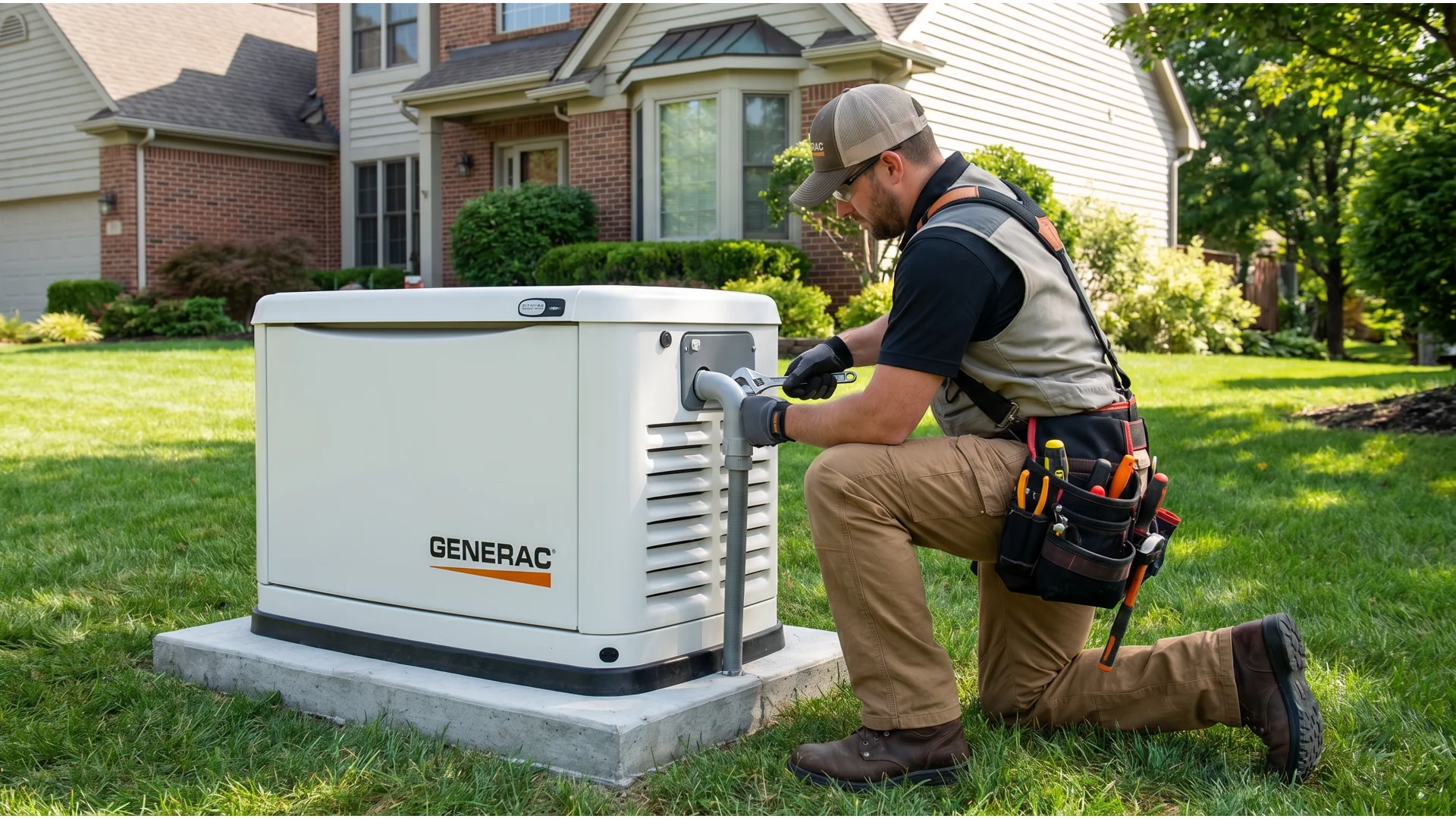
Protocol Services - Electric & Air installs whole-house standby generators for homeowners throughout Morris County — from the lake communities of White Meadow Lake and Lake Telemark to the established neighborhoods of Denville, Randolph, and Parsippany-Troy Hills. As an authorized Generac dealer, we supply and install the full Generac residential lineup: 11 kW, 14 kW, 18 kW, 22 kW, and 48 kW air-cooled and liquid-cooled units. Every installation includes factory warranty support, genuine Generac parts, and ongoing Generac-certified service capability. Unlike a portable generator, a Generac standby unit starts automatically the moment utility power fails — no extension cords, no manual setup, no trips outside in a storm.
The component that makes a standby generator work is the automatic transfer switch (ATS). Installed between your utility meter and your home's electrical panel, the ATS monitors incoming utility voltage continuously. When JCP&L (Jersey Central Power & Light) power drops, the ATS signals the generator to start and transfers your home's electrical load to generator power within 10 to 30 seconds — then transfers back automatically once utility power is restored and stable. Every generator installation Protocol completes includes an ATS sized to your home's service entrance. This is not optional: NEC Article 702 (Optional Standby Systems) requires proper transfer equipment to prevent back-feeding the utility grid — a safety requirement enforced by the NJ Board of Examiners of Electrical Contractors under license #17230.
Morris County homes range widely in gas availability and service size. Before recommending any generator model, Protocol performs a full electrical load calculation per NEC Article 220 to match generator capacity to your actual household loads. Homeowners who want a complete picture of their panel and service before adding standby power sometimes pair this load calculation with a standalone electrical safety inspection. Fuel options include natural gas (where utility supply is available) and propane — propane is the appropriate choice for homes in areas of Morris County without gas line access, including many rural and lakefront properties. Because most generator installations also require a 200-amp panel upgrade to handle the transfer switch wiring and added load, Protocol assesses your existing service during the site visit and quotes both scopes together when needed. Homeowners adding an EV charger alongside a generator benefit from combining both projects under one permit pull and one licensed crew. All required electrical and mechanical permits are pulled by Protocol, and municipal inspections are scheduled and managed through completion.
For a full overview of our Morris County electrical services, including panel upgrades, rewiring, EV charging, and more, visit our electrical services hub.
What's Included in Every Generator Installation
Six reasons Morris County homeowners choose Protocol Services for whole-house generator installation.
Authorized Generac Dealer
As an authorized Generac dealer, Protocol provides factory-backed installation, genuine Generac parts, and direct warranty support for every generator we install in Morris County. Generac holds the #1 residential generator market share in the United States — and authorization matters: unauthorized installations may void the factory warranty and complicate future warranty claims. Protocol is also listed on Generac's dealer locator, verified by QMerit.
Automatic Transfer Switch Installation
Every Protocol generator installation includes a service-entrance or load-center automatic transfer switch (ATS). The ATS monitors incoming utility voltage and transfers your home's load to generator power within 10 to 30 seconds of a JCP&L outage — without any action from you. This is not optional equipment: NEC Article 702 mandates proper transfer switching to prevent backfeed onto utility lines. We size the ATS to your service entrance and coordinate the electrical connection to match your panel configuration.
Generator Sizing & Load Calculation
Selecting the wrong generator size is one of the most common — and costly — mistakes in generator installation. Protocol performs a full electrical load calculation per NEC Article 220 before specifying any unit. We evaluate critical loads (sump pump, refrigeration, medical equipment) and whole-house loads (HVAC, water heater, lighting, appliances) to recommend the right Generac model — 11 kW, 22 kW, 48 kW, or another size — matched to your specific home. We also apply the 80% rule: continuous load should not exceed 80% of rated generator capacity.
Natural Gas & Propane Options
Standby generators run on either natural gas or propane — and the right choice depends on what's available at your address. Natural gas connects directly to your utility supply for essentially unlimited fuel without refilling, and operating costs are generally lower where PSE&G or other gas utilities serve your street. Propane is the correct alternative for homes across Morris County without gas line access — including many lakefront, rural, and semi-rural properties in Rockaway Township, Mine Hill, and beyond. Protocol coordinates fuel line sizing with a licensed plumber or gas fitter during the installation process.
Permits Pulled, Inspections Scheduled
Generator installation in New Jersey requires both an electrical permit and a mechanical permit from your municipality. Protocol handles all permit applications — in Rockaway Borough, Rockaway Township, Denville, Dover, Parsippany, Randolph, and throughout Morris County — and coordinates directly with the municipal inspection office to schedule the required inspections. You do not need to manage this process. Permitted and inspected installations protect you at resale and satisfy your homeowner's insurance requirements.
QMerit Certified Installation
Protocol Services is QMerit Certified — the independent verification platform Generac uses to vet authorized installers for safety standards, code compliance, licensing, and insurance. QMerit certification is not a marketing designation; it requires passing a documented credentialing process and maintaining current licensing. For homeowners, QMerit certification provides a second layer of verification beyond the state license — confirmation that your installer meets Generac's own quality standards for the equipment they are installing.
What's Included in a Protocol Generator Installation
Every whole-house Generac generator installation Protocol completes in Morris County is a full-scope project — not a generator drop-off. Here is what is included in a standard installation package:
- Generac standby generator unit with factory warranty (model determined by load calculation)
- Concrete pad installation (poured per Generac specifications, where not already in place)
- Natural gas or propane fuel connection — gas line sizing and coordination with licensed plumber/gas fitter
- Automatic Transfer Switch (ATS) — service-entrance or load-center rated, sized to your panel
- Electrical wiring and panel connection per NEC Article 702 (Optional Standby Systems) and NEC Article 445 (Generators)
- Surge Protective Device (SPD) per NEC Article 230.67 — required on all new residential service installations under NEC 2020; protects generator control electronics and connected home systems
- All required NJ electrical and mechanical permits — pulled by Protocol for your municipality
- Municipal inspection scheduling — Protocol coordinates directly with your town's inspection office
- Owner walkthrough — Protocol reviews the weekly auto-test cycle, maintenance intervals, and Generac Mobile Link monitoring setup (where applicable) before we leave the job site
Installation timelines vary by permit processing speed. The physical installation typically takes one to three days. Permit approval in Morris County municipalities generally adds one to two weeks to the overall timeline. Protocol keeps you updated throughout the process.
Finance Your Generator Installation
Whole-house generator installation is a significant investment that pays back every time the lights stay on during a JCP&L outage. Protocol Services offers financing options for qualified customers — including 0% APR promotional terms — so you can move forward today without waiting. Ask about current financing options when you schedule your estimate.
Explore Financing Options Call (908) 878-6479Trusted by Morris County Homeowners
Real reviews from Rockaway, Dover, Wharton, and surrounding communities.
How Generator Installation Works — Step by Step
From site assessment to final inspection — here's exactly what Protocol does.
-
Site Assessment & Generator Sizing
Protocol visits your home and performs a full electrical load calculation per NEC Article 220. We evaluate your critical loads — sump pump, refrigeration, medical equipment, HVAC — and your total whole-house electrical demand to recommend the correct Generac model and fuel type for your address. We also assess the proposed generator pad location, existing panel configuration, and fuel line routing before any commitment is made.
-
Permit Application
Protocol pulls the required electrical permit and mechanical permit from your Morris County municipality. Rockaway Borough, Rockaway Township, Denville, Parsippany, Dover, Randolph, and other towns each have their own permit office and review timelines. Typical municipal processing is one to two weeks. We handle all applications and keep you informed of approval status so there are no surprises.
-
Concrete Pad & Fuel Line Coordination
A Generac standby generator requires a level, code-compliant concrete pad positioned per local setback requirements. Protocol pours or confirms an existing pad before scheduling the generator delivery. Simultaneously, we coordinate gas line sizing with a licensed plumber or gas fitter — whether connecting to an existing natural gas service or sizing a propane tank and regulator setup for homes without gas line access. Fuel line work is completed before the generator arrives on-site.
-
Electrical & ATS Installation
The Generac standby unit is placed on the pad and wired to the automatic transfer switch by Protocol's NJ-licensed electricians under License #17230. The ATS is installed at the service entrance or load center per NEC Article 702 and connected to your utility meter and panel. A Surge Protective Device (SPD) is installed per NEC Article 230.67 to protect generator control electronics and home systems from transient voltage. All wiring is completed per NEC Article 445 generator wiring requirements.
-
Load Test, Municipal Inspection & Owner Walk-Through
Before calling for inspection, Protocol performs a load test at 80% of the generator's rated capacity — the maximum continuous operating load per manufacturer and NFPA standards — to confirm proper function under realistic demand. The municipal inspector then reviews the completed installation and signs off on both permits. After inspection approval, Protocol walks you through the generator's weekly auto-test schedule, maintenance intervals, and Generac Mobile Link app setup for remote monitoring. You leave the walk-through understanding exactly how your system operates.
Generator Installation FAQs — Morris County, NJ
How much does a whole-house generator cost in New Jersey?
A whole-house Generac standby generator installation in New Jersey typically runs $12,000 to $20,000 fully installed — including the generator unit, automatic transfer switch, concrete pad, electrical wiring, fuel line coordination, and all required permits. Smaller critical-circuit generators (11 kW) start at the lower end of that range; larger whole-house units (22 kW and above) approach the upper end. Installation costs in Morris County vary by site conditions, panel configuration, and fuel line complexity. Protocol provides a written itemized estimate before any work begins — no surprises at completion.
How much should it cost to install a whole-house generator?
Industry-wide, whole-house generator installation costs range from approximately $6,000 to $11,000 for smaller standby units covering critical circuits, up to $20,000 or more for 20 kW+ whole-house installations in markets like Morris County where permit costs, labor rates, and fuel line complexity add to the base hardware cost. The installed price of a Generac 22 kW unit — one of the most common whole-house configurations in NJ — typically falls between $12,000 and $17,000 fully installed. Propane installations may add cost for tank setup and regulator sizing. Protocol's estimates cover all phases of the project, including fuel coordination.
Do I need a permit for generator installation in Morris County NJ?
Yes. Generator installation in New Jersey requires both an electrical permit and a mechanical permit from your municipality. This is a code requirement enforced by the NJ Board of Examiners of Electrical Contractors — an unpermitted generator installation creates liability at resale and can create problems with your homeowner's insurance. Protocol Services pulls all required permits in Rockaway, Denville, Dover, Parsippany, Randolph, and every other Morris County municipality where we work. Permit fees are included in our estimate. You do not manage this process.
How long does generator installation take?
The physical installation of a whole-house Generac generator typically takes one to three days, depending on panel complexity, pad preparation requirements, and fuel line routing. However, permit approval adds time before the physical work can begin — Morris County municipalities generally process electrical and mechanical permits within one to two weeks. The full timeline from signed estimate to final inspection is typically two to four weeks, with permit timing being the variable. Protocol keeps you updated throughout so you know where the project stands.
Is natural gas or propane better for a standby generator in Morris County NJ?
Both fuels are viable for standby generator operation — the right choice depends on what is available at your specific address. Natural gas provides an essentially unlimited fuel supply connected directly to your utility line, with lower per-unit energy costs and no tank to refill. However, not all areas of Morris County have natural gas service — particularly rural townships, lakefront communities, and parts of Wharton, Mine Hill, and northern Rockaway Township. For those homes, propane is the correct option: a properly sized propane tank provides days to weeks of generator runtime depending on load. Protocol evaluates fuel availability during the site assessment and sizes the fuel system accordingly.
What is an automatic transfer switch and do I need one?
An automatic transfer switch (ATS) is the electrical component that connects your standby generator to your home's electrical system. It monitors incoming utility voltage continuously and, when JCP&L power fails, signals the generator to start and transfers your home's load to generator power within 10 to 30 seconds. When utility power returns and stabilizes, the ATS transfers back and shuts down the generator automatically. You do not need to take any action. An ATS is not optional — NEC Article 702 (Optional Standby Systems) requires proper transfer switching to prevent backfeed onto utility lines, a hazard to JCP&L lineworkers restoring service. Every Protocol generator installation includes an ATS sized to your service entrance.
What is the 80% rule for generators?
The 80% rule states that a generator should be loaded to no more than 80% of its rated capacity when operating under continuous load. This standard, referenced in NFPA standards and Generac's own installation guidelines, prevents overheating, premature wear, and voltage instability under sustained demand. In practical terms, a 22 kW generator should not carry more than approximately 17.6 kW of continuous load. This is why generator sizing matters: a unit selected without a proper load calculation may run close to or above the 80% threshold, reducing reliability and lifespan. Protocol's pre-installation load calculation accounts for this margin when recommending a generator model.
How often should a whole-house generator be maintained?
Generac recommends annual service by a Generac-certified technician — typically covering oil and filter changes, spark plug inspection, battery testing, cooling system checks, and transfer switch operation verification. In addition to annual professional service, every Generac standby generator runs a weekly automatic self-test cycle (typically Sunday morning by default, adjustable via the generator's control panel or Mobile Link app) that exercises the engine for 12 minutes under light load. Homeowners should listen for the weekly test, verify the unit completes it without fault codes, and check the oil level periodically between annual service visits. Protocol Services provides ongoing Generac-certified maintenance for generators we install.
What generator brands are best for Morris County NJ homes?
Generac holds the largest residential standby generator market share in the United States and is the brand Protocol Services is authorized to supply and install as an authorized Generac dealer. Generac's residential lineup — from the 11 kW Guardian series through the 22 kW and 48 kW RXSW whole-house units — covers the full range of Morris County home sizes and load profiles. Kohler and Cummins are respected alternatives with strong track records in the commercial and light-commercial space; Protocol can speak to those platforms during a consultation. For most Morris County homeowners, Generac represents the best combination of residential product depth, parts availability, service network, and dealer support in this region.
Who are the best generator installers in Morris County NJ?
For Morris County homeowners, the relevant qualifications are: authorized dealer status with the generator brand being installed, NJ electrical contractor licensing, QMerit verification, and proven local experience. Protocol Services - Electric & Air holds all four: authorized Generac dealer (factory-backed installation and warranty), NJ Electrical License #17230, QMerit Certified status (Generac's independent installer vetting platform), and continuous operation serving Morris County since 2011. We pull all permits, coordinate the full installation scope including fuel line and pad, and provide post-installation support through our Generac-certified service capability. Call 908-878-6479 or schedule online to start with a no-obligation site assessment and estimate.
Generator Installation Service — Morris County, NJ
Authorized Generac dealer (NJ License #17230) serving Rockaway, Dover, Denville, and all of Morris County since 2011. Whole-house generator installation, automatic transfer switch wiring, and permit coordination under one licensed team.
Protocol Services - Electric & Air
350 US-46 Suite 217Rockaway, NJ 07866 (908) 878-6479
24/7 Emergency Electrical Service
Licensed · Bonded · Insured
NJ Electrical License #17230
QMerit Certified EV Installer · Generac Dealer
Carrier Dealer · Rheem Dealer
Serving Morris County Since 2011
About Morris County, NJ
Morris County stretches along Route 46, I-80, and Routes 202/206 — corridors lined with mid-century colonials, split-levels, and Cape Cods built primarily between 1955 and 1985. Towns like Dover, Wharton, Mine Hill, and Rockaway Borough carry high concentrations of older Federal Pacific Electric and Zinsco panels that were installed during that era and are now well past service life. Lakefront neighborhoods — White Meadow Lake, Lake Telemark, Indian Lake, and Hibernia — see a mix of seasonal cottages and year-round homes, many with outdated 100-amp service that can't support modern loads. Affluent communities like Denville, Randolph, and Parsippany-Troy Hills drive strong demand for 200-amp upgrades to support Level 2 EV chargers, Generac standby generators, and heat pump systems from Carrier, Mitsubishi, and Fujitsu. Landmarks like Jockey Hollow National Historical Park, the Great Swamp National Wildlife Refuge, and Lake Hopatcong — NJ's largest lake — anchor a county where older infrastructure and modern energy demands meet head-on.
Morris County Communities We Serve
Outside this list? Call (908) 878-6479 — we serve all of Northern NJ.
Get a Free Generator Installation Estimate in Morris County
Protocol Services - Electric & Air — Authorized Generac Dealer — NJ License #17230 — QMerit Certified — Serving Morris County since 2011. Call 908-878-6479 or schedule online to start with a no-obligation site assessment and written estimate.
Schedule Your Estimate Call (908) 878-6479