Circuit Breaker Replacement & AFCI/GFCI Upgrade · Rockaway, NJ · Serving New Jersey

Circuit Breaker Replacement Rockaway, NJ & All of New Jersey

Protocol Services is licensed by the NJ Board of Examiners of Electrical Contractors (License #17230) and has served New Jersey homeowners since 2011. We replace failed and hazardous circuit breakers, upgrade panels to meet NEC 210.12 AFCI and NEC 210.8 GFCI requirements, and evaluate Federal Pacific and Zinsco panels for documented failure hazards — same-day appointments available.

Same-Day ServiceFree, No-Obligation Estimate — Breaker Repair & ReplacementGet a Free Estimate

Licensed electricians serving all of New Jersey except Cape May County. 24/7 emergency service. 100% satisfaction guarantee on every job. Panel replacements may qualify for 0% APR financing.

NJ Licensed Electrical #17230 Permits Pulled & Inspections Scheduled Code-Compliant Under NEC 2020 Fully Insured & Bonded QMerit Certified EV Installer Generac Dealer Serving New Jersey Since 2011
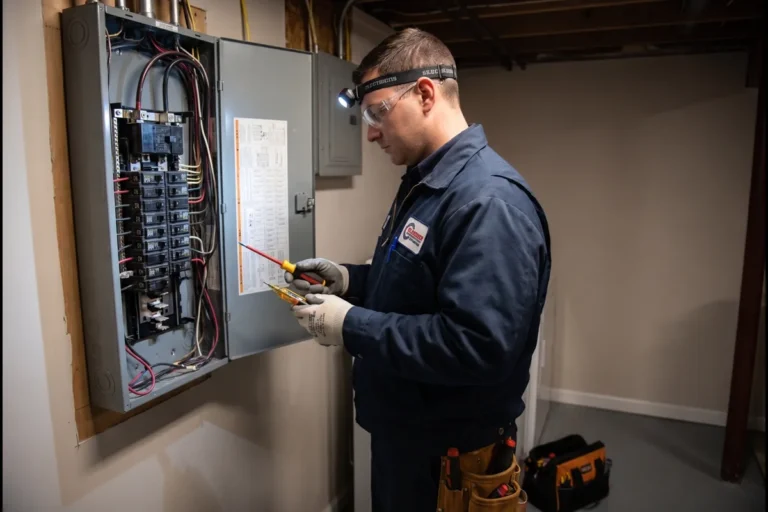
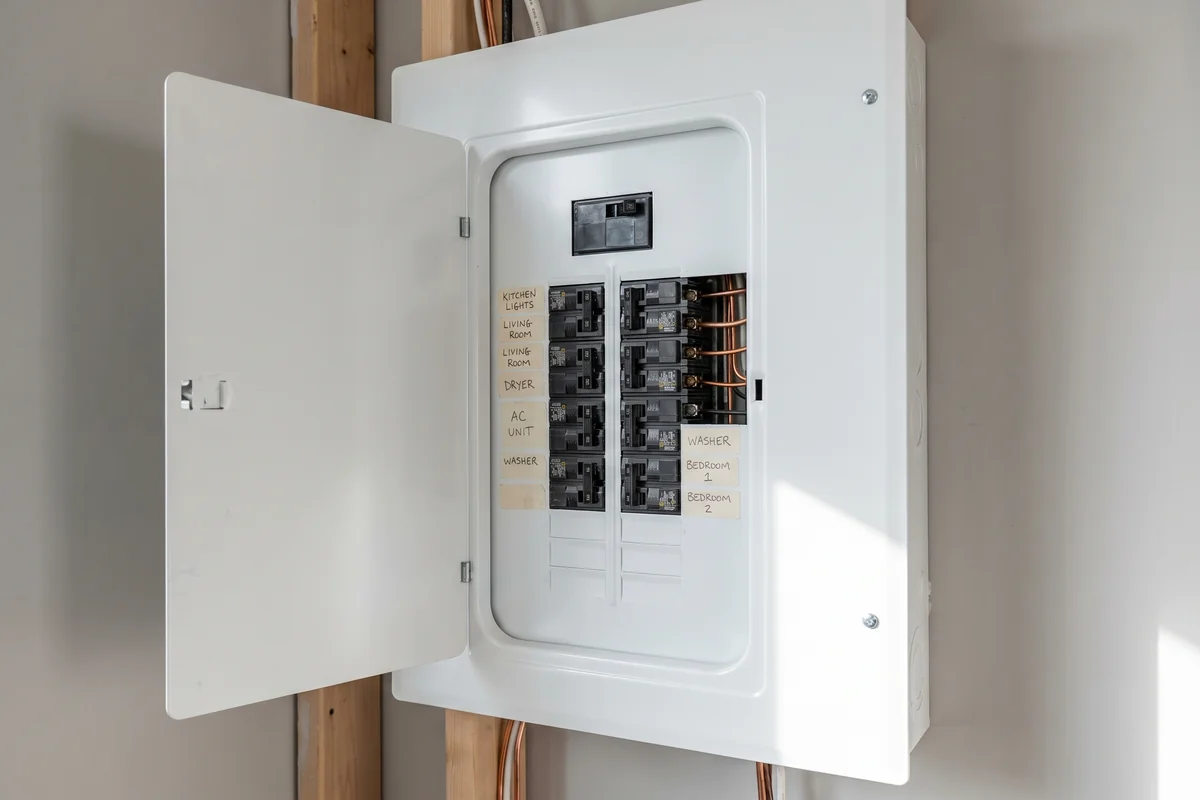
Licensed electrician inspecting circuit breaker panel for replacement in Morris County NJ home — Protocol Services Electric & Air
When to Call

Signs Your New Jersey Home Needs Circuit Breaker Service

Morris County's housing stock — mid-century colonials in Dover and Wharton, split-levels throughout Rockaway Township, lakefront homes at White Meadow Lake and Lake Telemark — carries aging electrical infrastructure that increasingly fails to meet current NEC 240.6 ampere-rating standards and NEC Article 230 service entrance requirements. If your home shows any of the following signs, schedule an evaluation before a nuisance trip becomes a fire.

  • Circuit breaker trips repeatedly under normal household loads — occasional trips are expected; chronic tripping under normal use signals a breaker that has lost its calibration or a circuit that is genuinely overloaded.
  • Breaker feels warm or shows discoloration — heat discoloration on a breaker face or the surrounding bus bar is a sign of thermal damage. A properly functioning breaker should never run hot to the touch.
  • Burning smell from the electrical panel — any burning, melting plastic, or ozone odor from the panel is an immediate emergency. Turn off the main breaker and call (908) 878-6479.
  • Flickering lights on a circuit — flickering that follows a specific circuit often indicates a failing or overloaded breaker struggling to maintain consistent contact rather than a bulb or fixture issue.
  • Double-tapped breakers visible in the panel — two wires sharing a single breaker terminal is a common code violation. Under NEC 240.6, each circuit must land on a properly rated individual breaker unless the breaker is explicitly rated for two-wire connections.
  • Home has a Federal Pacific Electric (Stab-Lok) or Zinsco panel — these breakers have a documented failure rate. FPE Stab-Lok and Zinsco breakers may not trip under fault conditions, which defeats the core safety function of the breaker.
  • Adding a new high-draw appliance — Level 2 EV chargers (typically 40–60A), mini-split systems, hot tubs, and whole-home generators require a dedicated circuit sized to NEC 240.6 standards.
  • Home is 30+ years old with no panel service history — panels installed in Morris County between 1960 and 1990 may include obsolete breaker brands, undersized ampere ratings, and wiring that predates modern NEC Article 230 service entrance standards.
⚠ Federal Pacific Electric (Stab-Lok) & Zinsco Breakers — Morris County Hazard Advisory

Federal Pacific Electric Stab-Lok breakers have a documented failure rate confirmed by U.S. Consumer Product Safety Commission (CPSC) studies: these breakers may not trip under fault conditions, allowing a short circuit or overload to persist until a fire starts. Zinsco breakers share the same fundamental defect — the bus bar connection degrades over time, creating arc paths inside the panel.

Under NEC Article 230 and NEC 110.9 (interrupting ratings), a breaker must be rated and able to actually interrupt fault current. A breaker that does not trip is not a breaker — it is a fire waiting for the right conditions.

Morris County's mid-century housing stock — particularly neighborhoods in Dover, Wharton, Mine Hill, Rockaway Borough, and Victory Gardens — carries a high concentration of FPE and Zinsco panels installed during the 1960s and 1970s. If your home has either panel brand, schedule a full inspection before the next storm season. Protocol Services evaluates and replaces these panels under NJ License #17230. Call (908) 878-6479.

What We Offer

Circuit Breaker Services — Rockaway & New Jersey

From a single failed breaker to a full FPE panel replacement, Protocol Services handles every level of circuit breaker work under NJ License #17230 — with permits pulled from your municipality when required.

Single Breaker Replacement

A like-for-like swap of any failed, tripping, or thermally damaged breaker. We install Square D QO or Siemens breakers — manufacturer-matched to your existing panel brand for code-compliant installation under NEC 240.6 ampere ratings. Most single-breaker replacements are completed same day.

AFCI Breaker Upgrade

Arc-fault circuit interrupters detect the signatures of dangerous arcing faults that standard breakers miss. NEC 210.12 requires AFCI protection on bedroom circuits and, under the NEC 2020 cycle, expands coverage to virtually all living spaces. We install Square D QO AFCI or Siemens AFCI breakers, code-documented for real estate disclosures and insurance review.

GFCI Breaker Installation

Ground-fault circuit interrupters protect against shock in wet and outdoor locations. NEC 210.8 mandates GFCI protection in kitchens, bathrooms, garages, unfinished basements, outdoors, and boat docks. A GFCI breaker at the panel protects the entire circuit — eliminating the need for multiple GFCI outlets throughout the space.

FPE / Zinsco Panel Evaluation

A complete documented inspection of Federal Pacific Electric Stab-Lok and Zinsco panels — including breaker thermal imaging, bus bar integrity check, and a written hazard report. We photograph every breaker, document trip-function failures, and provide a replacement pathway under NEC Article 230 service entrance standards. Essential for New Jersey home sales.

Load Analysis & Breaker Sizing

Before adding an EV charger, mini-split, hot tub, or whole-home generator to your New Jersey home, a load calculation confirms whether your existing panel has the capacity and correctly rated breakers per NEC 240.6 standard ampere ratings. We identify available capacity, flag overloaded circuits, and specify the correct breaker size for each new load.

Panel Upgrade Pathway

When breaker replacement is not enough — when the panel is undersized at 100A, space is exhausted, or the panel itself is an FPE or Zinsco unit — Protocol Services coordinates a full 200A or 400A service upgrade. We manage the utility notification (JCP&L, PSE&G or Atlantic City Electric, depending on your utility), pull the municipal permit, and handle the complete installation under NEC Article 230 service entrance requirements.

Financing Available

AFCI/GFCI Upgrades Starting at $0 Down

PSE&G and JCP&L customers upgrading to AFCI and GFCI breakers for code compliance may qualify for home improvement financing programs. Which programs apply depends on your utility: PSE&G, JCP&L and Atlantic City Electric for electric, and PSE&G, NJNG, Elizabethtown Gas and South Jersey Gas for gas. We confirm yours from your bill. Protocol Services offers 0% financing on circuit breaker upgrades — so cost doesn't delay a safety repair.

AFCI breaker upgrades throughout a typical Morris County home run $800–$2,000 depending on circuit count and panel accessibility — far less than the cost of a fire, a failed home inspection, or an insurance denial. A single breaker replacement typically runs $100–$300. Call to discuss the scope for your home before the next storm season.

Call (908) 878-6479 Learn About Financing
What to Expect

How Circuit Breaker Replacement Works

  1. Panel Inspection

    A licensed Protocol Services electrician (NJ #17230) photographs and documents the entire panel — every breaker slot, bus bar connection, and service entrance condition. We identify Federal Pacific Electric Stab-Lok or Zinsco breakers, double-tapped circuits, thermal discoloration, and any deviations from NEC Article 230 service entrance requirements. This photo record supports insurance claims and real estate disclosures.

  2. Circuit Mapping

    We identify which breaker serves which circuits throughout the home — bedrooms, kitchen, baths, garage, outdoors — and confirm that each breaker's ampere rating matches the wire gauge it protects per NEC 240.6 standard ratings. We flag every circuit that qualifies for AFCI upgrade under NEC 210.12 and every wet-location circuit that requires GFCI protection under NEC 210.8.

  3. Breaker Replacement

    We install Square D QO or Siemens breakers — AFCI, GFCI, or standard — matched to the panel manufacturer's specifications. Where your municipality requires a permit (FPE/Zinsco panel replacement, new circuits, service upgrades), we pull it through the local construction office before breaking into the panel. All work meets NJ Uniform Construction Code standards enforced by the NJ Board of Examiners of Electrical Contractors.

  4. Load Testing

    Every replaced breaker is tested under actual circuit load — not just a visual check. We verify the breaker trips correctly at its rated threshold, holds steady under normal continuous loads, and shows no thermal rise at the terminal connection. Any breaker that fails load testing is replaced on the spot before we close the panel.

  5. Final Documentation

    We update the panel directory label with accurate circuit descriptions, provide a written summary of all work completed, and issue a NEC 2020 compliance letter for AFCI/GFCI upgrades when needed for real estate transactions, insurance underwriting, or local inspection sign-off.

Common Questions

Circuit Breaker FAQs — Rockaway & New Jersey

How do I know if my circuit breaker needs to be replaced versus just reset?
Reset the breaker — move it fully to OFF, then back to ON. If it trips again immediately under normal load, the breaker itself has likely failed and needs replacement. If it holds but trips again after running the same appliance, the circuit may be genuinely overloaded rather than the breaker being faulty. Other replacement indicators: a breaker that won't reset at all, one that stays in the middle "tripped" position without snapping to OFF, visible discoloration or a burning smell from the panel, or a breaker that feels warm to the touch. When in doubt, Protocol Services offers same-day panel inspections in New Jersey — call (908) 878-6479.
How much does circuit breaker replacement cost in NJ?
A single standard breaker replacement in Morris County typically runs $100–$300 depending on the breaker type and panel accessibility. AFCI and GFCI breakers carry a higher material cost than standard breakers — expect the upper end of that range per circuit for code-upgrade work. A full AFCI upgrade throughout a typical home (10–15 circuits) generally runs $800–$2,000. FPE or Zinsco panel replacement is a larger project; contact Protocol Services at (908) 878-6479 for an accurate estimate based on your New Jersey home's specific service size.
What is the difference between AFCI and GFCI breakers — do I need both?
They protect against two different hazards. GFCI (Ground-Fault Circuit Interrupter) breakers detect current leaking to ground — the kind of fault that causes electrocution in wet locations like kitchens, baths, and garages. NEC 210.8 governs where GFCI protection is required. AFCI (Arc-Fault Circuit Interrupter) breakers detect the electrical signature of arcing faults — loose connections or damaged insulation that can start fires without triggering a standard breaker. NEC 210.12 governs AFCI requirements, which now cover bedrooms and most living areas under NEC 2020. Many circuits in a fully upgraded New Jersey home will use a Dual-Function AFCI/GFCI breaker that satisfies both code sections in one device.
My Federal Pacific (FPE) panel has Stab-Lok breakers — how dangerous is that?
Federal Pacific Electric Stab-Lok breakers have a documented failure rate confirmed by CPSC research: they may not trip under single-pole overloads, meaning the breaker that is supposed to stop a fire may simply let the fault continue. This is not a theoretical concern — it is the reason home inspectors in Morris County flag these panels and why some insurance carriers in NJ now decline coverage or add surcharges for FPE panels. Under NEC 110.9, a breaker must be capable of interrupting fault current at its rated voltage. Protocol Services evaluates FPE panels throughout Dover, Wharton, Rockaway, and Mine Hill — call (908) 878-6479 to schedule an inspection under NJ License #17230.
Can I replace a circuit breaker myself in NJ, or does it require a licensed electrician?
In New Jersey, work inside the electrical panel — including breaker replacement — requires a licensed electrical contractor. Homeowner exemptions exist for certain minor repairs, but panel interior work is explicitly outside those exemptions under NJ statute. Beyond the legal requirement, the risk of working inside an energized panel (the service entrance lugs remain live even with the main breaker off) is significant. The NJ Board of Examiners of Electrical Contractors licenses and regulates this work. Protocol Services carries NJ License #17230, full liability insurance, and bond.
What causes a circuit breaker to keep tripping?
Chronic tripping has four common causes: (1) Overloaded circuit — too many devices drawing more amperage than the breaker's rating per NEC 240.6; (2) Short circuit — a hot wire contacting neutral or ground, usually causing an immediate hard trip; (3) Ground fault — current leaking to a grounded surface (wet locations, damaged insulation); (4) Failed breaker — internal mechanism worn out, calibration lost, thermal element degraded. A breaker that trips repeatedly under normal loads is telling you something — call (908) 878-6479 for same-day diagnosis in New Jersey.
Do I need a permit for circuit breaker replacement in Morris County?
It depends on the scope. A like-for-like single-breaker replacement in an existing slot generally does not require a permit in most Morris County municipalities. However, adding new circuits, upgrading the panel, replacing an FPE or Zinsco panel, or installing AFCI/GFCI breakers as part of a renovation project typically does require a permit from the local construction office. Protocol Services handles permit coordination as part of the job — we identify permit requirements before we start, pull the permit when required, and schedule the inspection. We serve Rockaway Borough, Rockaway Township, Dover, Wharton, Mine Hill, Denville, Randolph, Parsippany, and all of New Jersey except Cape May County.
What is NEC 210.12 and does it require me to upgrade to AFCI breakers?
NEC 210.12 is the National Electrical Code section governing Arc-Fault Circuit Interrupter protection. It requires AFCI protection on circuits serving bedrooms (since NEC 1999), and NEC 2014 expanded the requirement to include virtually all habitable rooms. NEC 2020 — the current adopted cycle — extends AFCI requirements to kitchens, laundry, and most living spaces. For existing New Jersey homes, AFCI upgrades are not automatically required unless you are renovating that portion of the home or pulling a permit that triggers code compliance. Protocol Services can review your specific situation and advise on what NJ's current adoption of the NEC requires for your project.
My breaker panel feels warm — is that normal?
No. A panel running at normal load should be close to room temperature. Warmth at the panel exterior means heat is building inside — from a loose connection, a breaker under sustained overload, or an arcing fault that is not yet severe enough to trip. Any detectable heat warrants an immediate inspection. A panel that is warm to the touch during normal household activity is a fire risk — call Protocol Services at (908) 878-6479 today. We serve all of New Jersey except Cape May County with same-day electrical inspections.
How long does a full circuit breaker panel inspection take?
A thorough panel inspection at a typical New Jersey residence — photographing all breakers, testing trip functions, identifying double-taps, checking for FPE/Zinsco identification, and reviewing the service entrance condition — takes approximately 45–90 minutes. If circuit mapping is included, add another 30–60 minutes depending on the home's size. Protocol Services provides a written inspection report with photos. Schedule at (908) 878-6479 — Morris County appointments available same week.
Do you serve my town?
Yes, if your home or business is in New Jersey outside Cape May County. Protocol is based in Rockaway, in Morris County, and serves all of New Jersey except Cape May County: Sussex, Passaic, Bergen, Warren, Morris, Essex, Hudson, Union, Hunterdon, Somerset, Middlesex, Mercer, Monmouth, Ocean, Burlington, Camden, Atlantic, Gloucester, Salem and Cumberland counties. Our same-day and 24/7 emergency service applies across that whole area. Call (908) 878-6479 and we will confirm your address, or request a free estimate online.
What Our Clients Say

Trusted by New Jersey Homeowners

Real reviews from Rockaway, Dover, Wharton, and surrounding communities.

Service Area

Circuit Breaker Service — Based in Rockaway, Morris County, NJ

Licensed electricians (NJ #17230) based in Rockaway, Morris County, and serving all of New Jersey except Cape May County since 2011. Circuit breaker repair, replacement, and panel service under one licensed team.

Protocol Services - Electric & Air

350 US-46 Suite 217
Rockaway, NJ 07866
(908) 878-6479

24/7 Emergency Electrical Service
Licensed · Bonded · Insured
NJ Electrical License #17230

QMerit Certified EV Installer  ·  Generac Dealer
Carrier Dealer  ·  Rheem Dealer
Serving New Jersey Since 2011

View on Google Maps Call (908) 878-6479

About Morris County, NJ

Morris County stretches along Route 46, I-80, and Routes 202/206 — corridors lined with mid-century colonials, split-levels, and Cape Cods built primarily between 1955 and 1985. Towns like Dover, Wharton, Mine Hill, and Rockaway Borough carry high concentrations of older Federal Pacific Electric and Zinsco panels that were installed during that era and are now well past service life. Lakefront neighborhoods — White Meadow Lake, Lake Telemark, Indian Lake, and Hibernia — see a mix of seasonal cottages and year-round homes, many with outdated 100-amp service that can't support modern loads. Affluent communities like Denville, Randolph, and Parsippany-Troy Hills drive strong demand for 200-amp upgrades to support Level 2 EV chargers, Generac standby generators, and heat pump systems from Carrier, Mitsubishi, and Fujitsu. Landmarks like Jockey Hollow National Historical Park, the Great Swamp National Wildlife Refuge, and Lake Hopatcong — NJ's largest lake — anchor a county where older infrastructure and modern energy demands meet head-on.

Morris County Communities We Serve

Outside this list? Call (908) 878-6479 — we serve all of New Jersey except Cape May County. Counties we serve: Sussex, Passaic, Bergen, Warren, Morris, Essex, Hudson, Union, Hunterdon, Somerset, Middlesex, Mercer, Monmouth, Ocean, Burlington, Camden, Atlantic, Gloucester, Salem, Cumberland.

Circuit Breaker Problems in New Jersey? We're Ready.

Free in-home assessment. Licensed electricians (NJ #17230), code-compliant installation under NEC 2020, and 100% satisfaction guarantee. Serving New Jersey since 2011.

Call (908) 878-6479 Request Free Estimate
Scroll to Top
This site is protected by reCAPTCHA and the Google Privacy Policy and Terms of Service apply.